Wood, vinyl, or chain link – which wins the race? 🏆
Picking a fence kind of reminds you of shopping for tires. That shiny option catches your attention – yep, bright white vinyl (sure looks nice 😉) – but your wallet whispers to keep it simple… maybe stick with trusty chain link.
It’s an old-school showdown – looks against cash, toss in grind, perhaps how much you’re driven to keep winning.
If you’re unsure about which way to go – yep, that’s right 😂 – this breakdown gives a hand. Because we pulled data from our Fence Price Tool, options appear side by side without fluff. So here’s how each stacks up for what you actually need!
🌲 Contender 1: Wood Fencing (The Classic)
Wood’s a bit like your go-to sneakers – never outta fashion, fits just right, yet somehow ties everything together.
The feel? Down-to-earth, cozy – sort of hidden away too.
The cost? Kinda mid-range – about fifteen to thirty dollars per foot.
The real deal? Keep up with it, no doubt. 🖌️ Skip sealing once in a while – starts looking dull, could start breaking down later on.
Fair heads-up: works real well if you like vintage vibes – just as long as you’re cool with helping out now and then. Yeah, it needs some effort, no doubt, yet folks still dig what it offers – give it attention here and there whenever things slow down.
✨ Contender 2: Vinyl (PVC) Fencing (The Modern Marvel)
Vinyl’s showing up neighborhood after neighborhood – honestly, makes total sense. Works kind of like a fence version of a cellphone: smooth look, no fuss, super simple to handle.
The sensation? Airy, clean – basically ideal.
The cost? High – ranging from twenty to forty dollars per foot.
The problem? Hits your wallet fast. 😬 Since when a limb drops and splits part of it, swapping only that piece won’t work – whole chunks need replacing.
Fine print: Works well if you’re happy to spend more today just to skip painting forever.
🔗 Contender 3: Chain Link (The tough Guy)
It’s ugly, sure – yet somehow works quick.
The feel? Tough, no-frills construction. A solid layout – still offers strong protection.
The cost? Super low – just 12 to 25 dollars per foot.
The tough bit? No privacy at all. So when you’re barbecuing in your PJs, folks nearby get a full view. 🍔 That said, tossing up some cheap plastic wrap could work. Real talk – it kinda screams retro ’90s vibes.
A decent choice if you want to keep your dog in place without spending much. Simple? Yeah – yet it works fine when cash is low.
🥊 The Showdown: Side-by-Side Comparison
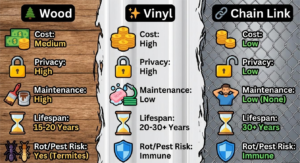
💡 How to Compare Costs Like a Pro
Stop guessing – check how it hits your cash. Try this trick through our Fence Cost Calculator now.
Start off by noting how big your yard is – say, 150 feet – and slip in details about the gate while you’re at it.
Try it out – pick “Pressure Treated Wood,” then press Calculate. Jot down the result. Note it down straight away.
Select “Vinyl” this time – tap Calculate once more right away.
The bulb lights up when you line them side by side. Most times, vinyl runs nearly a third pricier than wood. Think it over – skimping fifteen hundred bucks now might lead to fresh paint on your porch yearly for two decades.
(Spoiler: Lots say yes – looks like they really mean it!)
🙋♂️ Frequently Asked Questions (FAQ)
Why’s vinyl so pricey now?
A tough plastic built to handle sun, storms, or cold – lasts season after season. What really matters? Smart design combined with long-term toughness.
Q: Which fence lasts the longest?
A: Metal grid or plastic layer? One might last way past our time – pretty much doesn’t quit. 🧟♂️ Wood, though, quits later down the road, cracks under wet and heat, typically bites the dust in 15 to 20 years, depends where it’s sitting.
Q: Can this work with various kinds of wood?
A: Yep! Swap from “Standard” (Pine) to “Premium” (Cedar) anytime you like. Cedar smells good, while keeping bugs away. Still, it runs around 20% pricier.
Q: Can I install these myself?
A: Sure, it’ll do the job – though nailing every detail? Harder than you’d think. Should the barrier tilt, folks next door could get curious. 😉
Want to compare more costs? Visit our tools at Calcify Labs.