📌 Freight Density Calculator Guide – Avoid Costly Reclassifications 🚛📦
Freight shipping is one of the biggest expenses in logistics — and getting it wrong can be costly. Miscalculations often lead to reclassification fees, delayed deliveries, and wasted money.
That’s where a freight density calculator comes in. Whether you’re using our advanced XPO Density Calculator or another professional tool, the goal is the same: ship smarter, cheaper, and without surprises.
In this in-depth guide, we’ll cover:
✅ What freight density is (and why it matters)
✅ How NMFC classes impact your shipping costs
✅ A step-by-step guide to using a freight density calculator
✅ Practical tips to optimize packaging and reduce freight spend
✅ FAQs for shippers, brokers, and logistics managers
Let’s dive in and take control of your freight costs.
🚀 What Is Freight Density? (And Why You Should Care)
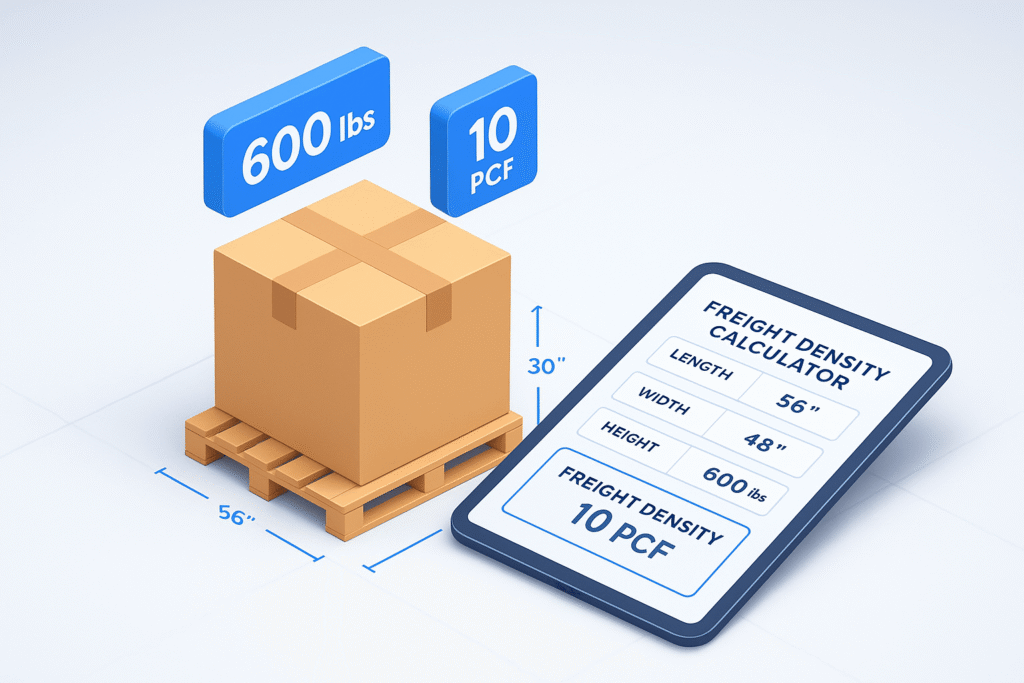
Freight density measures how much space your shipment occupies relative to its weight — expressed as pounds per cubic foot (PCF).
The Formula
Freight Density = Total Weight (lbs) ÷ Total Volume (cubic feet)
📌 Example:
If a shipment weighs 600 lbs and occupies 60 cubic feet, its density is 10 PCF.
Why does this matter?
🎯 Determines NMFC Class – Carriers classify freight based on density.
💰 Directly Affects Cost – Higher density = lower class = cheaper shipping.
📦 Helps Space Planning – Maximizes truck space utilization.
📊 Understanding NMFC Freight Classes
The National Motor Freight Classification (NMFC) system groups freight into classes (50 to 500) based on:
Density(PCF)
Stowability
Handling requirements
Liability
Here’s a quick reference:
| Class | Density Range (PCF) | Example Freight |
|---|---|---|
| 50 | 50+ | Steel, engines |
| 70 | 15–22.5 | Food, textiles |
| 100 | 9–10.5 | Boat covers |
| 150 | 6–7 | Furniture |
| 250 | 3–4 | Mattresses |
| 500 | <1 | Ping pong balls |
✅ Lower classes (50–85) → cheaper shipping
❌ Higher classes (175–500) → more expensive
🏆 Why Use a Freight Density Calculator (Like XPO Density Calculator)
Doing math manually for multiple pallets is time-consuming and error-prone.
Here’s why professional tools matter:
- ✅Accuracy: Eliminates human error
- ✅Time-Saving: Instant results, even for multiple items
- ✅NMFC Compliance: Uses official class standards
✅ Optimization Tips: Suggests cost-saving adjustments
- ✅Export Function: Save and share results
💡 Pro Tip: Using a calculator before booking freight helps avoid reclassification charges (which can be 2–3× your original freight cost).
🛠️ Step-by-Step: How to Use a Freight Density Calculator
Using our XPO Density Calculator is quick and easy:
1️⃣ Enter Shipment Dimensions
- Input length, width, height (in inches)
- Add weight (lbs)
- Select quantity & use pallet presets
2️⃣ Click “Calculate”
You’ll get:
📊 Total volume
⚖️ Freight density (PCF)
🏷️ NMFC class
💰 Estimated cost impact
3️⃣ Optimize Your Results
- Adjust packaging or consolidate shipments
- Recalculate to find a cheaper freight class
👉 Try it now: XPO Density Calculator – Calculate Your Freight Density Here
💡 Tips for Accurate Freight Density Calculation
Your results are only as good as your data.
Follow these expert tips:
📏 Include Packaging: Measure the full unit (box + pallet + wrapping).
⚖️ Add Pallet Weight: Standard pallets weigh 30–48 lbs.
📐 Measure Longest Dimensions: Even if oddly shaped.
🔢 Round Up: Carriers round up — avoid disputes.
✅ Double-Check Before Booking: Saves $$ on reclassification.
📦 Who Should Use This Tool?
This isn’t just for big carriers — it’s valuable for:
🏪 E-commerce Sellers – Ship bulk orders efficiently
🏭 Manufacturers – Avoid surprise surcharges
🚛 3PLs & Freight Brokers – Give accurate quotes
📈 Supply Chain Managers – Reduce overall costs
📚 FAQ – Freight Density Calculator Guide
Q1: Can I use this calculator internationally?
Yes. Density calculations are universal, but NMFC classes are U.S.-specific.
Q2: What happens if my freight is reclassified?
You may face extra charges & delays — prevent this with accurate measurements.
Q3: How often does NMFC update?
Regularly — and our calculator stays synced with latest standards.
[Image Prompt Here: FAQ-style graphic with shipping icons and question marks.]
🎯 Conclusion – Ship Smarter, Spend Less
Freight classification doesn’t have to be stressful. A freight density calculator makes sure you:
✅ Get the right NMFC class
✅ Pay lower shipping costs
✅ Avoid costly reclassification fees
🚀 Take control of your shipping today:
👉 Try the XPO Density Calculator Now
Or explore our homepage for more smart shipping tools and calculators.